

When the power goes out, information becomes almost as important as water.
Mobile networks can slow down or fail. Social media fills with noise. Official updates may not reach you quickly. In longer disruptions, reliable information reduces uncertainty and helps you make better decisions.
A dedicated emergency radio is one of the simplest upgrades you can make to your preparedness plan. It does not need a subscription, does not rely on internet access and works independently of fragile infrastructure.
This guide focuses on radios that are practical for real household use during blackouts and disasters. Not camping gadgets. Not novelty hand-crank toys. Reliable devices you can store and depend on when needed. Even without portable power source
Why an emergency radio still matters
In many regions, public authorities still rely on radio broadcasts during large-scale outages. Weather alerts, evacuation notices and infrastructure updates are often distributed through AM and FM bands even when internet access becomes unreliable.
An emergency radio gives you:
Access to official updates
Weather alerts
Local news during infrastructure failures
A secondary communication channel when digital networks struggle
It is a small device that removes a large amount of uncertainty.
What actually matters when choosing one
The emergency radio market ranges from very cheap plastic devices to solid, well-built units designed for long-term reliability. Focus on these factors rather than marketing claims.
Power options
A good emergency radio should offer more than one charging method.
Look for combinations of:
Rechargeable battery
Replaceable batteries
Hand crank
Solar charging
Rechargeable + replaceable batteries is often the most practical pairing. Hand crank and solar are useful backups but should not be your primary plan.
Reception quality
During an outage, clarity matters. Weak reception defeats the purpose.
Look for:
Strong AM/FM reception
NOAA weather band (in the US)
Clear tuning mechanism
External antenna
Cheap radios often claim wide coverage but perform poorly in real conditions.
Durability
You are not buying a lifestyle accessory. You are buying something that may sit unused for months or years before it is needed.
Choose:
Solid casing
Physical buttons rather than delicate touch controls
Water resistance if possible
Reliability matters more than appearance.
Practical recommendations by use case
Instead of ranking by hype, it makes more sense to match radios to household needs.
Best overall reliability for home preparedness
Midland ER300 Pro
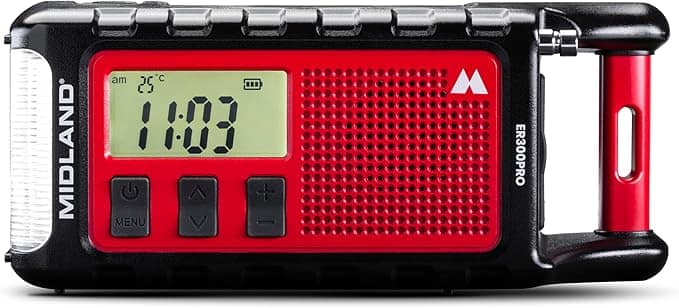
Midland has long been associated with weather and emergency radios. The ER300 is one of the more balanced options for home backup.
Strengths:
Strong NOAA reception
Multiple charging methods
Replaceable battery option
Clear flashlight integration
It is not the smallest model available, but for households that want a dependable unit stored with their emergency kit, it strikes a good balance between size and reliability.
Check current pricing and availability across Amazon and major retailers before purchasing. Prices vary seasonally.
Best compact option for apartments or small kits
Eton Odyssey
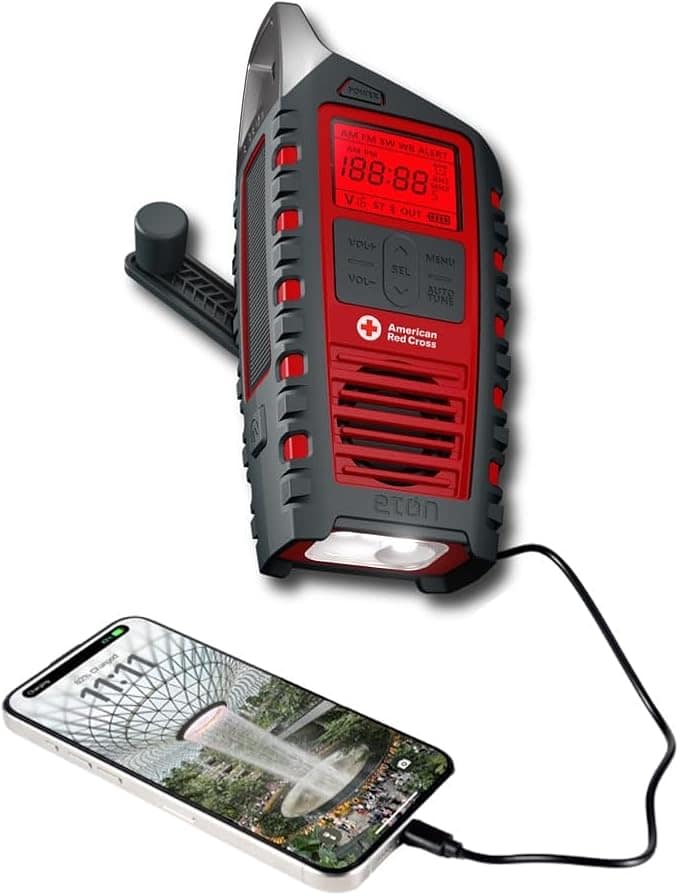
For smaller households or apartment living, a compact but well-built radio makes more sense than a larger unit.
The Odyssey offers:
Good weather band coverage
Rechargeable battery
Hand crank backup
USB charging capability
It is portable enough to keep in a drawer or emergency backpack without taking up space, yet capable enough to serve as a primary information source during short outages.
Best budget-friendly choice
RunningSnail MD-090 (or similar entry-level model)
For those building preparedness gradually, there are solid budget options that provide core functionality without premium pricing.
Expect:
Basic AM/FM and weather band
Rechargeable battery
Crank and solar options
Flashlight
Reception quality may not match higher-end models, but for short-term outages and general redundancy, these units are often sufficient.
Best for extended outages and backup charging
Kaito KA500RED or similar mid-to-premium model
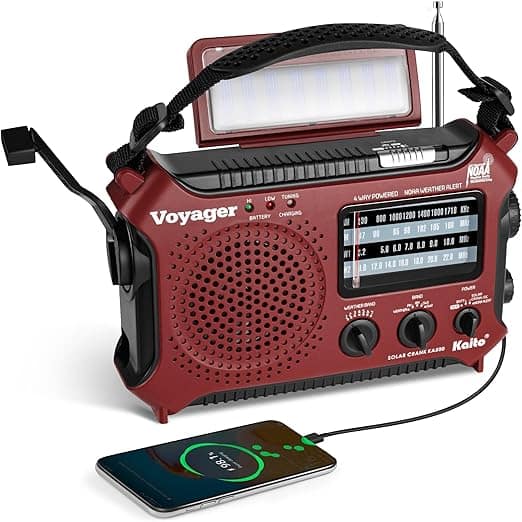
Some radios offer stronger batteries and the ability to charge external devices more effectively. For longer disruptions where phone charging becomes critical, this category can make sense.
Features typically include:
Larger internal battery
Improved speaker clarity
Bluetooth (optional but not essential)
Stronger flashlight integration
These are useful if you want one device that handles both information and limited backup charging.
What you do not need
It is easy to overspend on features that add little value during a real disruption.
You do not need:
Complex touch screens
Overly large speakers
Excessive digital features
Expensive “tactical” styling
The purpose of an emergency radio is simple. Receive clear information when other systems fail.
Where this fits into your preparedness plan
An emergency radio works best alongside:
Stored water
Basic food supply
Reliable lighting
Backup power for communication
If you have already prepared for prolonged power outages, adding a dependable radio closes an important gap. It ensures that while others are relying on unstable mobile networks, you have direct access to official updates.
During a blackout, information reduces uncertainty. During broader disruptions, it can influence critical decisions.
A small device with disproportionate impact
An emergency radio is not dramatic equipment. It sits quietly in a drawer until it is needed.
But when digital channels slow down or fail, that quiet device becomes one of the most stabilizing tools in your home.
Preparedness is not about extreme scenarios. It is about reducing vulnerability in practical, affordable ways.
A reliable emergency radio does exactly that.