

The summer of 2026 isn’t over yet, and it’s already shaping up to be one of the toughest wildfire seasons Southern Europe has seen in years. Spain and France alone have evacuated more than 250,000 people this week, with fires also burning in Italy and parts of the UK. A record-hot June combined with persistent drought has left much of the Mediterranean primed to burn, and the season hasn’t even peaked yet.
If you’re spending the summer somewhere like the Costa Brava, Provence, Tuscany or the Algarve, this isn’t distant news anymore. Even if your rental sits outside the immediate fire zone, smoke, road closures or an evacuation order are all realistic possibilities this season.
Early warning signs you shouldn’t ignore
Wildfires spread faster than most people expect, often faster than local authorities can broadcast updates. A few things worth watching for wherever you’re staying:
A faint burning smell that isn’t explained by a nearby barbecue is usually the first sign, well before you see any smoke. Strong, dry wind paired with high heat is exactly the weather pattern that lets fires expand explosively. And if local radio, sirens or neighbours suddenly seem on edge, that’s often a more reliable warning than anything you can see from your own balcony.
When the evacuation order comes
Don’t wait until you’re completely certain. Authorities in Spain and France now evacuate faster and wider than they did a few years ago, precisely because late evacuations cost more lives than early, “unnecessary” ones. Follow local emergency instructions even if they come sooner than you’d like.
Never drive into an area where smoke is visible, not even to grab belongings you left behind. Keep car windows and vents closed to limit smoke inhalation, and choose evacuation routes that move away from the wind, not into it.
What to keep ready
This is the difference between an unpleasant evening and a genuine crisis. A small grab-bag you can pick up within two minutes isn’t overkill in an area with active fire risk.
Worth having on hand: an N95 or FFP2 mask against smoke inhalation, a physical copy of passports and travel insurance in a waterproof pouch, a fully charged power bank in case the power goes out, and some cash in case card payments stop working. A small first aid kit and enough water for the first few hours belong in there too. If you’re travelling with family or elderly parents, it’s worth putting this bag together the moment you arrive, rather than trying to think of it mid-evacuation.

Alert systems that actually work
In Spain, the ES-Alert system pushes automatic warnings to every phone in a risk zone, no app download required. France runs the equivalent FR-Alert system, and Météo-France’s Vigilance Météo map shows risk level by department in real time. Both systems rely on your phone’s location at the moment of the alert, so turn on location services as soon as you arrive at your destination.
It’s also worth checking your home country’s foreign travel advisory page before and during a longer stay in one of the affected regions, since these are updated as conditions change.
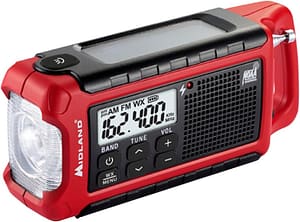
Check our article on emergency radio’s to stay informed about changing conditions
What about your travel insurance?
Policies vary a lot in what they cover for natural disasters like wildfires, cancelled flights, missed accommodation or a forced extension of your stay. Check this with your own insurer before you leave rather than assuming it’s covered; that’s not something a blog post can answer for you, but it’s something you can confirm in five minutes.
A wildfire during your holiday isn’t something you can control, but how you respond to it is. A few minutes of preparation and the right apps on your phone put you in a considerably less helpless position than most people around you.