

Most people give some thought to what they keep at home for emergencies. Far fewer think about the car, which is where many disruptions actually begin. A breakdown on a quiet road in winter, a collision on a motorway, getting caught in a flash flood while driving, or being stuck in traffic during a grid failure are all scenarios where what you have in the vehicle with you determines how the next few hours go.
A car emergency kit does not need to be elaborate. It needs to cover the most likely scenarios, fit in the boot without taking over the space, and be there when you need it rather than sitting at home.
Why the car is a gap in most emergency plans
A household 72-hour emergency kit covers what you need when you are at home. A go-bag covers what you carry when evacuating on foot or by vehicle. Neither of those directly addresses what happens when you are already in the vehicle and something goes wrong away from home.
The scenarios worth preparing for fall into two categories. The first is vehicle-specific: a breakdown, a flat tyre, a dead battery, running out of fuel, or a minor accident. These are the most common reasons people need help with a car and most of them are manageable with the right equipment without waiting for roadside assistance. The second is being caught in a broader disruption while driving: severe weather that forces you to stop, a road closure that leaves you stationary for hours, or an evacuation scenario where you are moving between two points and need supplies for the journey.
A well-stocked car kit handles both categories without carrying unnecessary weight.
Vehicle recovery and roadside essentials
The foundation of a car emergency kit is the equipment that handles the most common vehicle failures.
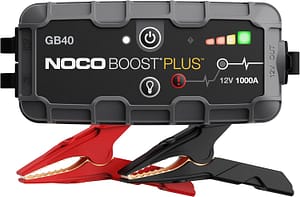
A jump starter is the single most useful item in most car kits. A dead battery is one of the most common breakdown causes, and a portable lithium jump starter means you can restart the vehicle yourself without needing another car or waiting for roadside assistance. Modern lithium jump starters are compact enough to fit in a glove box, hold charge for months between uses, and double as a power bank for charging devices. A jump starter with at least 1000 peak amps handles most passenger vehicles including larger engines.
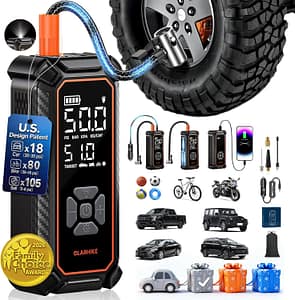
A tyre inflator or portable air compressor handles slow punctures and underinflated tyres without needing a garage. Many breakdowns that appear to be flat tyres are actually slow leaks that can be reinflated and driven to a repair shop rather than requiring a full tyre change on the roadside. A 12V compressor that connects to the cigarette lighter socket is the standard format and takes up minimal space.
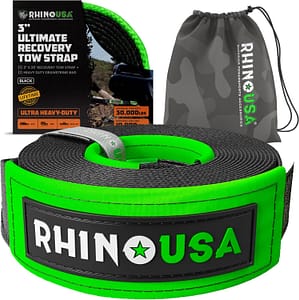
A tow rope or tow strap covers the scenario where a vehicle needs to be pulled from mud, snow, or a ditch. Recovery straps with looped ends are safer and more practical than chain-style tow ropes for most situations. A 4-metre strap with a 4-tonne minimum breaking strength is appropriate for most passenger vehicles.
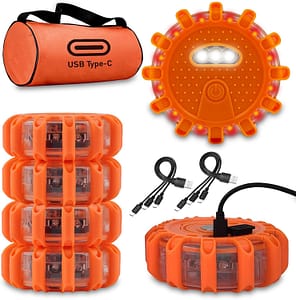
Warning triangles or LED road flares are essential for marking a broken-down vehicle on a road or motorway. In many countries warning triangles are legally required. LED magnetic flares are a practical upgrade: they are visible in daylight, do not require open flame, and attach to the vehicle body rather than needing to be positioned on the road surface.
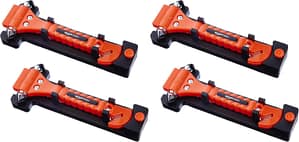
A seatbelt cutter and window punch combination tool belongs in every car, stored within reach of every passenger rather than in the boot. In a collision where the vehicle is submerged or the door cannot be opened, these are the tools that allow exit. A compact two-in-one tool stored in the door pocket or attached to the visor takes seconds to deploy and has a clear and specific purpose.
First aid
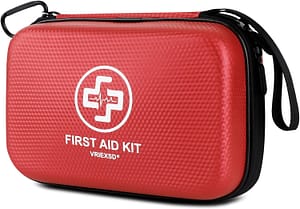
A car-specific first aid kit covers the injuries most likely to occur in a road incident: lacerations, impact injuries, and burns. The key items beyond a standard kit are trauma dressings for controlling serious bleeding, a tourniquet, and burn dressings sized for the type of injuries a road accident produces. The what should be in a first aid kit article covers the items most often missing from pre-assembled kits, many of which apply directly to a vehicle kit.
Store the first aid kit where it can be reached from inside the vehicle, not buried under other items in the boot. In an accident the boot may be inaccessible or the vehicle may be in a position where opening it is not practical.
Warmth and shelter
Being stranded in a vehicle in cold weather is a more serious situation than most people anticipate. A car that has stopped running loses its heat relatively quickly, and waiting hours for recovery in winter without adequate clothing is very dangerous.
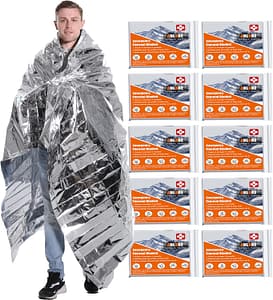
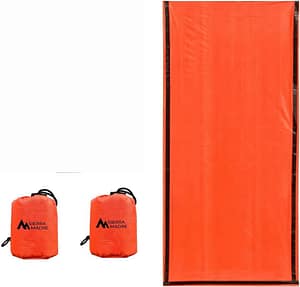
A space blanket takes up almost no space and retains body heat effectively. Keep two or three in the kit, one per regular occupant of the vehicle. A compact emergency sleeping bag is a step up from a space blanket for extended cold waits and is worth including if you regularly drive in winter or in rural areas where recovery times can be long.
A change of warm clothing, particularly gloves, a hat, and an extra layer, stored in a dry bag in the boot covers the scenario where you leave the house in mild conditions and conditions change. This is especially relevant for longer journeys.
Light and power
A head torch stored in the car handles everything from changing a tyre in the dark to signalling your position. Keep spare batteries with it or use a rechargeable model charged on the same schedule as your other emergency equipment.
A power bank ensures your phone stays charged during a long wait or a disruption that depletes the vehicle battery. If your jump starter includes a USB charging port, which most modern ones do, it doubles as a power bank and covers both functions in one item.
A 12V car charger for phones is worth having as a backup but should not be your primary power solution since it depends on the vehicle battery being functional.
Water and food
Keep at least two litres of water per regular occupant in the vehicle at all times, rotated every six months. In summer heat, vehicles reach temperatures that make standard plastic bottles unsuitable for long-term storage. A stainless steel water bottle or a dedicated emergency water pouch designed for high-temperature storage handles this better than a standard bottle left in a hot boot.
A small supply of shelf-stable, high-calorie food covers extended waits and disruptions that stretch beyond a few hours. Energy bars, nuts, and compact emergency rations store well in vehicle temperatures and require no preparation. These do not need to be elaborate. Enough to sustain one meal per occupant is a reasonable target.
Documents and cash
Keep a physical copy of your insurance documents, roadside assistance membership details, and emergency contact numbers in the glovebox. These are the documents you need quickly in an incident and should not be stored only on a phone that may be locked, damaged, or dead.
A small amount of cash in mixed denominations covers fuel, tolls, and basic purchases in scenarios where card payments are unavailable. This is the same principle as the household emergency kit: physical currency removes a dependency on functioning infrastructure.
Seasonal adjustments
A car kit is not a static thing. Certain items are more important at different times of year and it is worth adjusting the kit at seasonal transitions.
In winter, prioritise warmth and recovery: extra layers, a shovel for snow, a bag of sand or cat litter for traction on ice, and an ice scraper. In summer, prioritise heat management: additional water, sun protection, and a reflective windscreen cover that keeps the car cooler when parked. If you travel with children or pets, their needs should be reflected in the kit regardless of season.
Where to store it and how to maintain it
Everything in the kit needs to be accessible without completely unloading the boot. A dedicated soft bag or hard case that sits in one corner of the boot keeps the kit together and makes it retrievable quickly. Label it clearly so any driver using the vehicle knows where it is.
Check the kit twice a year at the same time as your home emergency supplies. Replace any expired food, water, or medications. Test the jump starter charge and top it up if needed. Check that the tyre inflator hose and connections are intact. Confirm the first aid kit has not been raided for household use and not restocked.
If you have a family emergency plan, include the car kit location and contents in it. Anyone who drives the vehicle should know what is in it and where it is stored.
A practical starting point
The items that give the most return for the least cost and space are a jump starter, a seatbelt cutter and window punch, a space blanket, a small first aid kit, a head torch, and two litres of water. That combination fits in a small bag, costs under a hundred dollars assembled, and covers the large majority of situations where you will actually need something from the kit.
Build from there at your own pace. A tow strap, a tyre inflator, and a power bank add meaningful capability at modest additional cost. Seasonal items come in and out as needed. The important thing is that the kit exists, is in the vehicle, and is checked often enough to be reliable.